    The company

    Who builds Aevum.

    A British AI company building local-first, accessibility-native tools for classrooms and school offices — designed in the UK, trained on national research infrastructure, accountable to UK law.

    Who builds Aevum?

    Aevum Foundry AI is built by Ana Jardim — a computer science engineer and a teacher of IT and Computer Science for twenty years, first in Portugal and then in England. She designs the systems and trains the models herself: the architecture, the training runs on Dawn, and the tool a teacher actually uses. It is a British company building local-first AI for classrooms and school offices, designed so the records stay in the building.

    Aevum — Latin for lifetime, for eternity. We chose this name because the tools we build are meant to serve the full arc of human experience: learning, working, creating, caring, living.

    It started with one question, put to teachers across several schools: if there were a magic AI tool that could take part of your job off your hands, what would it do? Their answers — mark the books, write the reports, plan the lessons, give the evenings back — are the specification Aevum is built to. That question opened Ana's talk at the University of Cambridge, and it is still the test every feature has to pass.

    We build differently: every model runs local-first, every interface is accessibility-native, and there are no dark patterns, no advertising and no data harvesting. For schools, Teacher Manager is paid — designed to be funded from budgets you already hold — while our public-benefit consumer work stays free at its core.

    This isn't charity — it's a conviction that AI should make the world more equitable, not less.
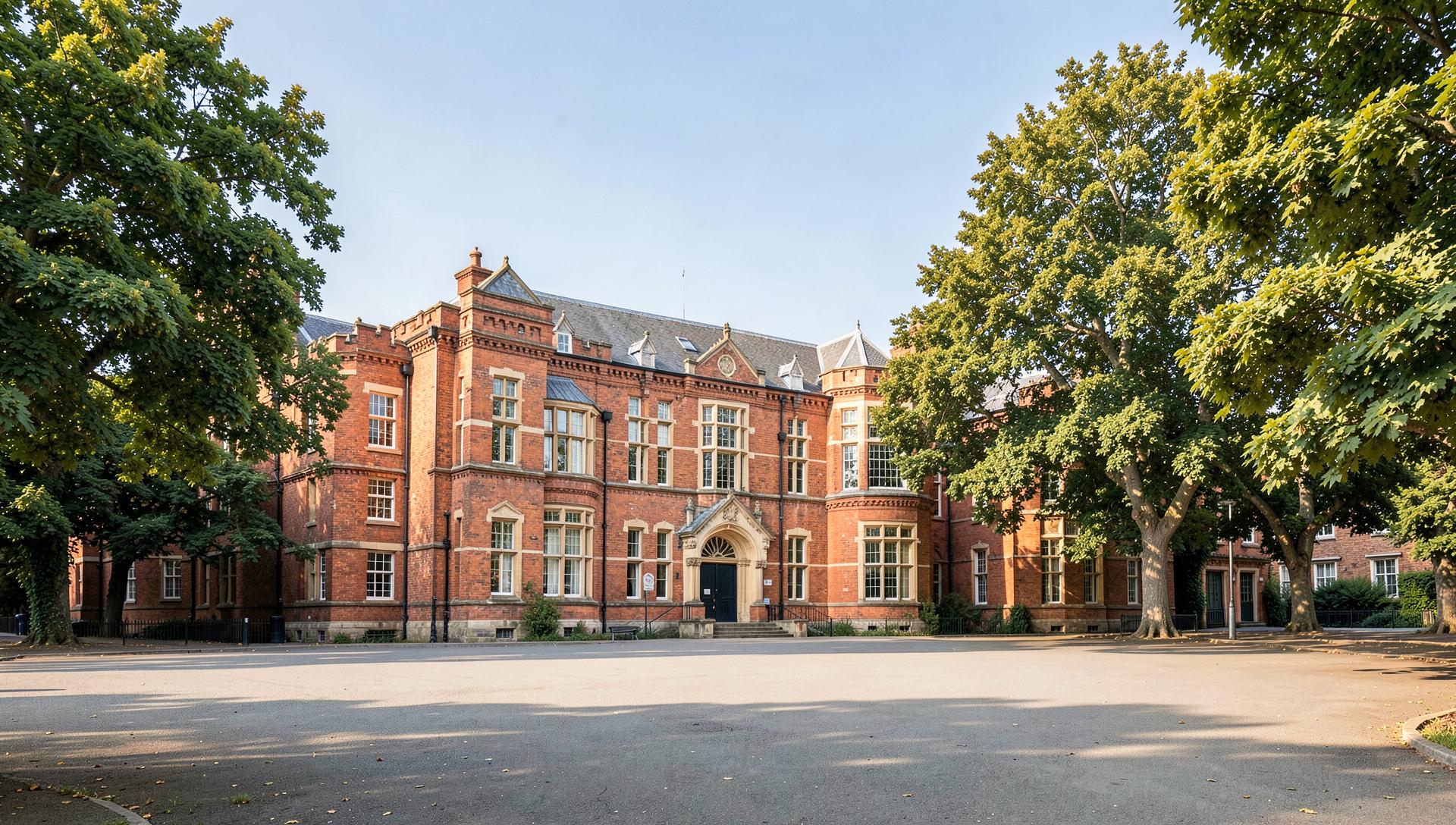
    A Victorian red-brick English school building on a clear morning.
    AI-generated atmospheric image. Read our imagery policy →

    What principles does Aevum build to?

    Six commitments decide every product call: your data stays with you, no dark patterns, transparency about how the models are made, accessibility as the quality bar, fair funding rather than freemium tricks, and digital inclusion designed in from the start rather than added later.

    Data Sovereignty

    Your data stays with you. Nothing you enter is sent to us, and nothing is used to train anything. The model comes to you, not the other way round.

    No Dark Patterns

    No manipulative UX, no notification traps, no engagement farming. Respectful software.

    Radical Transparency

    Open about our models, our training data, our business model. Trust is earned.

    Accessibility-Native

    WCAG 2.2 AA minimum. SEND-native, neurodivergent-first, multi-modal content delivery.

    Fairly Funded

    No engagement-farming freemium tricks. Our public-benefit consumer tools stay free at their core; schools pay for Teacher Manager from budgets they already hold.

    Digital Inclusion

    1.5 billion people lack access to quality tools. We build for them first, not as an afterthought.

    An empty school hall at the end of the day, low late-afternoon light crossing a worn wooden floor, with stacked wooden chairs in shadow along the far wall.
    AI-generated atmospheric image. Read our imagery policy →

    Aligned with the UN Sustainable Development Goals

    Aevum exists for one stubborn purpose: that no child is left behind. That purpose lines up with several of the United Nations Sustainable Development Goals. We would rather claim fewer goals and mean them than tick every box, so each goal below carries a specific commitment we can stand behind.

    Primary goals

    SDG 4: Quality Education

    Everything we build exists to raise the quality of education. Our tools give teachers back the hours lost to marking, planning and reporting, so that time goes back to teaching. Aevum is built by a teacher of twenty years, so the classroom is in the room for every product decision.

    SDG 10: Reduced Inequalities

    We design first for the children a stretched system reaches last: those with special educational needs and disabilities. Get it right for them, and it works for everyone else too. Accessibility is a first-principles design question for us, not a feature we bolt on at the end.

    SDG 1: No Poverty

    Attainment is one of the clearest routes out of poverty. A third of children in England leave school without passing English and maths, and for children with special educational needs it is more than half. Those missed passes follow a child into lower lifetime earnings. By helping teachers reach the children currently left behind, we work to close a gap that otherwise lasts a lifetime.

    Supporting goals

    SDG 5: Gender Equality

    Aevum is founded and led by a woman in AI, a field where that is still rare. Equitable outcomes for every child, girls included, sit at the centre of how the product is designed.

    SDG 8: Decent Work and Economic Growth

    Teaching should be decent work. Teachers are leaving the profession to workload and burnout. Giving them their evenings back is a working-conditions question as much as an education one. As a British company, we also build skilled jobs here in the UK.

    SDG 9: Industry, Innovation and Infrastructure

    We train our models on UK national infrastructure, on Dawn at the University of Cambridge through the AIRR programme. Our founder is a Core Member of the AIRR User Advisory Group, helping shape what that national infrastructure does next. We are one of a small number of UK companies running production-scale AI training on UK national infrastructure.

    SDG 16: Peace, Justice and Strong Institutions

    Strong institutions need tools they can hold to account. Own the model, keep the data, inspect the reasoning. A school's data stays in the school, and the model's reasoning can be inspected rather than taken on faith. We test our own models for privacy leakage and against a children's safety benchmark, and we publish our corrections when we get something wrong.

    SDG 11: Sustainable Cities and Communities

    Schools anchor their communities. Our local-first approach keeps a community's data and value where they are generated, on the school's own hardware where that is the right answer, rather than exported to a distant server.

    SDG 12: Responsible Consumption and Production

    We build with restraint. Local-first design and efficient models mean less duplicated subscription sprawl and less wasted compute. We also disclose how we work, including that our atmospheric brand imagery is AI-generated until we can commission real editorial work.

    SDG 17: Partnerships for the Goals

    We build with schools, not at them, through co-design with the educators who will use the tools. We also take part in the UK bodies shaping how AI serves the public, so the people affected help decide what gets built.

    Fewer goals, meant properly.