4 August 2026
The letters, the reports, the forms. The job around the job.
DfE guidance names routine parent letters as a reasonable use of AI. The harder question is which paperwork carries a child's name, and what that changes.
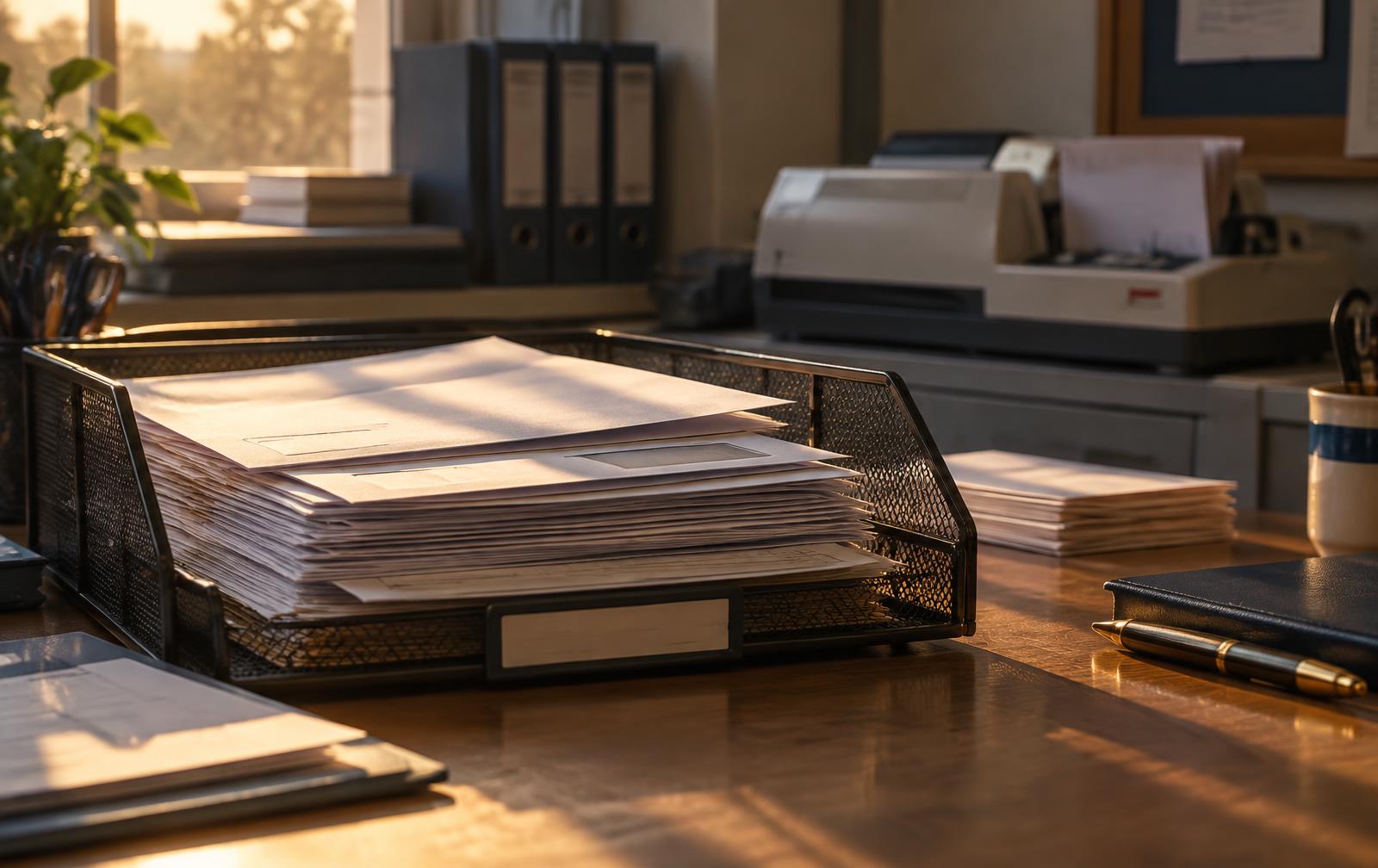
Schools in England may use AI to draft routine letters to parents, and Department for Education guidance names exactly that sort of task: trip reminders, standard notices, the correspondence that is the same every year apart from the date. The school still checks and sends it. The useful distinction is not between letters and reports. It is between paperwork that carries a child's name and paperwork that does not.
Which paperwork is safe to hand to AI, and which is not?
Sort it by whose personal data is in it. A trip letter to all of Year 4 contains none. A report on one pupil contains a great deal. A safeguarding note contains the most sensitive category there is. The drafting effort is similar in each case. The exposure is not remotely similar, and most tools treat all three identically.
- Low exposure: general notices, policy drafts, rota explanations, newsletter copy, standard trip and absence letters.
- Medium exposure: anything naming a small group, or describing an incident that identifies pupils by implication even without names.
- High exposure: individual reports, SENCO documentation, support plans, pastoral notes, anything that touches safeguarding.
- The test that matters: if this text left the building, would I have to tell someone? If yes, it should not be drafted anywhere that counts as leaving the building.
What about reports and SENCO documentation?
These are where the time actually goes, and they are precisely the documents that sit in the high-exposure column. That is an awkward result, because it means the highest-value use of the technology is also the one most tools cannot do safely.
There is a clean way out, and it is not to use AI less. It is to do the drafting where the data already lives. When the model runs on the school's own machine, the calculation disappears. The report is drafted, checked and saved on hardware the school owns, and it never crosses a network or a company boundary. The caution guidance asks for stops being a discipline someone has to maintain at half past nine on a Sunday and becomes a property of how the thing is built.
How do you keep the school's voice?
By giving the tool the school's own material to work from rather than a generic idea of how schools write. Parents notice when the tone changes. A letter that sounds like it came from a call centre undermines the relationship the letter exists to maintain, and a report that sounds like every other report tells a family that nobody looked closely at their child.
Practically, that means the tool should draft from the school's existing letters, its house style and the teacher's own notes, and it should be obvious what was changed. A draft nobody edits is a draft nobody read.
Who stays accountable?
The school, without exception. Guidance is consistent on this across marking, communication and SEND: AI may assist, the school remains responsible for accuracy, for data protection and for professional judgement. A letter sent in the school's name is the school's letter, whatever drafted it.
The School Paperwork module of Aevum Teacher Manager is in integration: reports, parent letters and SENCO documentation, drafted on the school's own hardware, reviewed before anything is sent. In development, as everything here is.
Common questions
Can schools use AI to write letters to parents?
Yes. Department for Education guidance names routine parent communication as a reasonable use of generative AI, provided the school checks the output before sending. The school remains accountable for what goes out in its name.
Is it safe to use AI for pupil reports?
Only if the pupil's data does not leave the school. A report names a child and describes their learning, which is personal data held to a higher standard under UK law. Drafting it on the school's own hardware removes the exposure rather than managing it.
Who is responsible if an AI-drafted letter is wrong?
The school. Guidance places accountability for accuracy, data protection and professional judgement with the school regardless of what drafted the text.
Aevum Foundry AI · Core Member, AIRR User Advisory Group · Trained on Dawn at the University of Cambridge.
Further